Leading up to TUSK Virtual, we invited some of our most respected music journalists to engage in conversation with artists featured at this year's festival. This inaugural installment brings together Stewart Smith (contributor to The Wire, Bandcamp Daily, The Quietus, and more) with Chicago-based composer Angel Bat Dawid.
Angel Bat Dawid captivated audiences worldwide with her groundbreaking debut record The Oracle in 2019. Recorded entirely on her iPhone in a single take, its eight compositions traverse spiritual jazz, hip-hop, blues, gospel, and spoken word, unified by Angel's mesmerizing clarinet work and vocals. Following that release, the Chicago composer has shared two singles and partnered with rappers and Afrobeat luminaries. While plans to tour with her ensemble Tha Brothahood were postponed due to the pandemic, she'll be joining forces with electronic musician Oui Ennui for TUSK. In this extensive conversation, she explores her creative partnerships, artistic influences, and the vital role of independent venues. As she eloquently states, "I'm all about the DIY!"
How has the lockdown period affected you? While it's been challenging for everyone globally, it appears you've maintained your creative momentum. What obstacles have you encountered and how have you navigated through them?
These times we're experiencing have been globally traumatic and demanding for all of us. Without this music as my outlet, I'd definitely be struggling far more! Creating and composing has served as an essential life force during this period. When lockdown began here, I immediately retreated into deep isolation and started working on numerous different projects. So while my performances and tours were being cancelled one after another, new opportunities simultaneously emerged—DJ sets, mixing and editing my next two albums, worldwide musical collaborations, virtual programming, all activities I could pursue from home. I've also been teaching a music class at a Juvenile Detention Center via Zoom, which has been incredibly rewarding to connect with these brilliant young people facing challenging circumstances—this has actually been my favorite thing throughout everything. And I continue teaching my one piano student, a genius nine-year-old pianist and composer. I've actually been tremendously blessed and grateful that my family and friends remain healthy, and I received substantial support from arts programs here in Chicago providing assistance to artists. Being in isolation actually proved somewhat wonderful, having unlimited time to create. Many days I became so immersed in composition that I'd stay awake for two days straight. I think it was my way of processing all the traumatic events unfolding worldwide. Quarantine provided me abundant time to work. Despite all the chaos, I've maintained an epic state of peace, channeling whatever concerns into the music.
You recently released a solo organ composition 'Voice 'o 'Heab'N'. Could you share the story behind that piece?
Yes, this emerged as one of the amazing opportunities that came my way. Mexican Summer record label reached out about contributing to a wonderful compilation series they were assembling called Looking Glass. I was genuinely excited about the opportunity to compose something fresh. I always meditate and pray before beginning any composition—it provides purpose for my work. So I followed my usual process and started experimenting with chords on my midi keyboard (I use FL Studio). I selected a basic generic organ sound and felt the vibe developing. Then I heard the words 'Voice O' Heab'N' in my mind—like the old spiritual 'I gotta shoe' way of pronouncing Heaven. That's why meditation and prayer before creating anything is essential, because it opens your ears to hear important messages from other realms. I was deep in my spiritual feelings thinking, I really wish I had an actual Hammond B3 organ. Then I realized, wait, we're in the future now! I can get a Hammond B3 VST plugin, which is considerably cheaper than acquiring a real organ and definitely not as heavy to move around. Though I still want a genuine one eventually. I researched and discovered Arturia B3 V2-V Collection, and suddenly a whole new mystical magical world of authentic B3 organ sounds was at my fingertips! I also studied this recording of Sun Ra performing organ on reel-to-reel—it's so epically spooky, creepy, and hauntingly ethereal and beautiful. I definitely wanted to tap into that frequency. I really wanted this to sound like I recorded it sixty years ago in the musty basement of an old Baptist church that was once an Underground Railroad stop. True story, I've actually visited such a basement when I was a little girl—it was definitely filled with intense energy. I remember holding onto my father's leg because I was super sensitive as a child to the paranormal and felt a bit overwhelmed.
You also put out a hip-hop piece, 'George Floyd' with Berry Blacc. Could you discuss that collaboration?
This was another incredible opportunity that emerged during lockdown. This radio station in England, Reform Radio, along with record label Remote Rhythm Lab, was exploring how to create something innovative for performances during lockdown. They developed this wonderfully magical concept of pairing two artists from different countries to create a track together within forty-eight hours. I was absolutely thrilled about this! I couldn't believe something so innovative was coming my way. They paired me with the amazing Berry Blacc, an incredible MC and producer based in Manchester. We had approximately a ten-minute logistics conversation on Zoom and immediately connected—it felt like we already knew each other, and I knew this collaboration would be truly significant. This opportunity arrived during the intense period when the George Floyd video devastated our community. Berry contacted me via email suggesting we somehow respond to all the unrest. I completely agreed with him. We desperately needed space to express how we felt about everything. So we began crafting and assembling pieces together, and 'George Floyd' was born!
'Transition East' was released in May and honors the Chicago venue of that name, as well as Total Refreshment Centre. What are your thoughts on Transition East as a venue and the significance of grassroots spaces generally? These venues are crucial to TUSK Festival, and there's concern they won't survive the pandemic. Is there a comparable situation in Chicago?
Absolutely—all the clubs and venues here are experiencing serious struggles. Some have even permanently closed, making it an extremely difficult time for those businesses. Transition East is somewhat different—it's more of a private space for the owner, multi-instrumentalist Eliel Sherman Story, who is one of my mentors. It's his music studio where he practices and works, but it's configured with a stage and kitchen so various people book events there. It's such a beautiful location! Eliel is also a carpenter, so he designed everything himself. The artwork is gorgeous and there's a rich, powerful frequency running through the place. When you enter, Eliel is usually creating gorgeous mystical sounds on his saxophones and always burning sweet intoxicating frankincense and myrrh incense—it's like a temple! He rents it out if you ask him, but most people don't really know about it and it's not open to the public daily. So it will continue existing because it's Eliel's space, and it's also a recording studio. Eliel serves as the live sound engineer for the Art Ensemble of Chicago—in fact, at one time he was storing Don Moye's drum kit there.
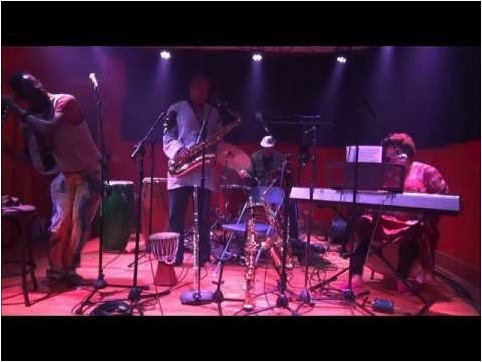
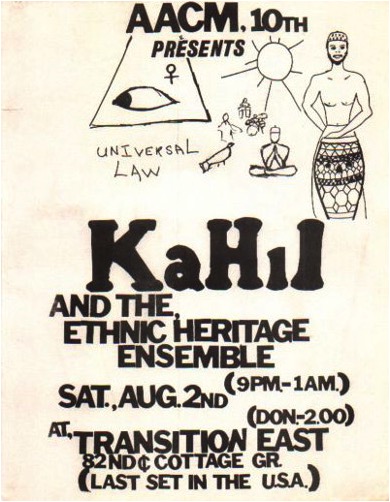
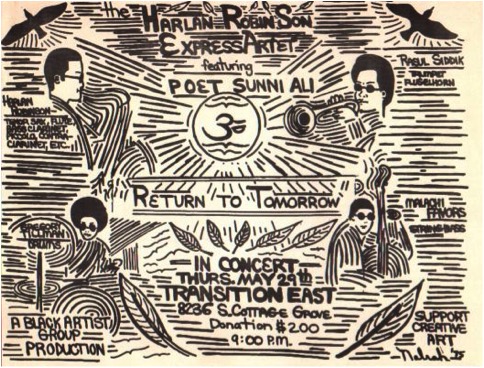
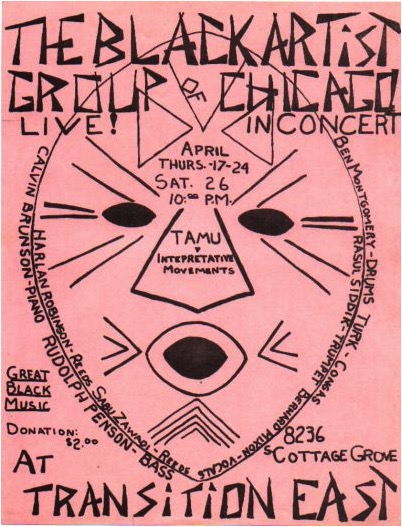
The current Transition East also carries rich Black music history. It's the spiritual successor to an earlier venue from the 1960s with the same name. The original Transition East was a health food restaurant that also functioned as an event space for many significant musicians. Many were part of AACM, and it was even owned at one time by the late great Phil Cohran! The space closed sometime in the eighties, according to what Eliel told me. The old Transition East was such an important space for him when he first began exploring music, and it was quite a spiritual hub as well. That's why he opened this space in homage to the legacy of that very obscure but massively paramount venue where many now world-renowned artists used to perform. There's remarkably little written about it, but when I've mentioned it to other artists who remember it, they always speak of it highly. Oral traditions are extremely important in the Black community—legacies are always preserved that way. That's how I know truly ancient sounds and traditions from way back, because relatives and elders share stories and sing us the old songs—especially in church. Ancient traditions are preserved remarkably well through oral traditions in the Black community, perhaps even better than if they were written down. The only written information you can really find about Transition East, to my knowledge, is a small paragraph in George Lewis' book about the AACM, A Power Stronger Than Itself—all folks interested in and students of any Great Black Music need to have this in your library—and a few really awesome posters online. But otherwise, you learn about it through word of mouth. For my generation, it became a special space for us to explore music, and many of us began hosting events, jam sessions, and recording sessions there regularly. It's such an important space for my musical development. The DIY and informal pop-up venues are actually extremely important in my opinion for developing and preserving musical traditions and forging new cultural communities!
The B-side, 'No Space Fo Us', was recorded in Brazil with longtime and new collaborators. I'm a passionate fan of Brazilian music, so I'd love to hear more about that journey. Will there be additional releases from those sessions?
Before the pandemic, I was scheduled to travel all over the world. I was in Nova Scotia in January, Brazil in February, and right before lockdown I was in Mexico City and planning to return to Europe that summer. So I was quite blessed to have had the chance to travel before quarantine. Going to Brazil was truly a great experience. I was invited to participate in an artist exchange where Brazilian artists came to Chicago last year to perform with us, and then we all went to Brazil to create with them. This exchange was organized through an awesome DIY space here in Chicago called Comfort Station. Again, I just couldn't believe how incredible this opportunity was for me.
I was also excited because we were going to Bahia, the region of Brazil with the richest African cultural presence, during their incredible Yemanja Festival. Because of this, I suppose I didn't anticipate encountering as much racism. But unfortunately, I did. During the exchange, there was a person—not part of the official exchange—who said what she thought was an innocent thing, but it was racist and made me very uncomfortable to be around her. I don't give people passes for cultural misunderstanding anymore. It's unacceptable because we're living in 2020 and people should know better. I was getting very irritated and started feeling discouraged about the trip. I knew I'd have to confront the issue to feel better, but I didn't want to be the 'Angry Black Woman' either and just unleash on this person—though I was definitely about to. See, this is the situation many artists of color experience when creating art in predominantly white spaces. There are microaggressions, and sometimes this weird uncomfortable dynamic that people have around Black folks, and you can tell they just haven't been around Black people. That's the real problem—why don't you know how to be comfortable around Black people? It's 2020! So I sought advice from my good friend and fellow label mate at International Anthem, the epic musician and artist Damon Locks of Black Monument Ensemble, who was also on the trip. I consider him incredibly wise, and I knew if I asked him what I should do, he would provide sound guidance. And he really did! He essentially told me to simply state the facts to the person and leave it at that. And that's exactly what I did. I told her that saying those types of things is harmful and I'm informing you so that you'll never do that again—and then I left, because this wasn't up for discussion or apologies, it was a statement and that's all I needed to do. I felt good about that, but I was still discouraged because it seemed like no matter where I go in the world, people find ways to make Black folks feel weird, excluded, and not part of the world—like there's never any space for us to just be ourselves without being reminded repeatedly that your Blackness is something foreign and problematic or a joke. I call it an innocent viciousness. I needed to compose something to release all those emotions. I forgive. I release.
My wonderful host was a prominent doctor, and I was staying in his beautiful house overlooking the ocean—it was stunning—and he also had a piano in his home and was such a supporter of the arts. So I was really blessed the piano was there. The music in Brazil was absolutely incredible—so many sounds surrounding me. I even went record shopping and spent way too much. The music there was mind-blowing! This five-four rhythm was occupying my mind. I was surprised because I never really compose in five-four time, but it was there. I knew that was Brazil infusing ancient rhythms into my soul. These arpeggios in five took over my fingers! I had plenty of composition paper and started writing things out. I also had my Zoom recorder with me—yeah, I've upgraded from my phone since The Oracle—which has a multi-track recorder, and I heard the melodies and harmonies and performed them on my clarinet. I was having tremendous fun and feeling better. Once I wrote everything out, I knew I wanted to record it. So I contacted Ed Brass Brazil, my good friend and fellow musician who was part of the exchange—he came to Chicago last year so we were already friends—and asked him if there was a recording studio I could use and could he gather a few musicians together. He said, I got you, friend! He was so helpful in securing the studio, Estudio Casa Das Maquinas, run by musicians Tadeau Mascarenhas and Nancy Viegas who also perform on the track, and assembling folks. Ben Lamar Gay from International Anthem was also on the trip, and I asked if he could come through and play on the track. Ben is like family and came right through. It was really enjoyable! And yes, there were a few other sessions that happened at the studio as well. Once it was recorded, I remembered that the label wanted a new track for the B-side of the Transition East 45, and I knew this was the perfect track for it.
One more thing about this trip to Bahia—I know this is lengthy, but another unexpected thing happened. I went to South Africa two years ago and met an amazing sound artist, Joao Orecchia. He randomly saw an Instagram post of mine and contacted me, informing me that he and his family—his partner Lindewe Matshikiza is also an artist—had just moved to Bahia for a residency at the Goethe Institute. The randomness of it all! I knew we needed to meet up and make some music. They invited me to their home at the Goethe Institute and we had an epic recording session there, and then Joao came through to the studio the next day with most of the folks on the exchange and we had this wonderful, incredible recording session. It was epic! I was amazed at how all my worlds collided into one space—Chicago, Brazil, and South Africa!
Overall, it was the journey of a lifetime—I'll never forget it! That trip truly allowed me to absorb different musical sounds and channel all of that to process my emotions in difficult situations. It was a blessing of a trip! And I produced a complete single from it!
Your recent collaborations outside jazz include Dumama + Kechou, A Billi Free & Tensei, and Ferdinando Arno ('What Love' has been one of our favorite summer anthems). Can you share how these came about and what you learned from the experiences?
I absolutely love collaborations and creating music with others. That has definitely been the most difficult part about this quarantine—we literally can't just meet up with folks and play music like we used to, for health reasons. Once again, all these people would randomly contact me, mostly through social media. You'd be surprised how many people just reach out on Instagram. I'm a strong advocate for using our modern technology to advance musical explorations to the next level. That's why using my phone to record The Oracle felt completely natural to me—nothing special or unique. All the composers of the past utilized what was accessible to them to express their compositional ideas. It's the same with social media. I always think about Sun Ra distributing his pamphlets of Black consciousness in Washington Park here in Chicago back in the day, and launching his own recordings for his label El Saturn. If he were alive today, he would be on YouTube, Instagram, Facebook, etc., doing the same thing. This new era of communication has its advantages and disadvantages, of course, but one of the biggest advantages is that social media makes it incredibly easy to connect with others globally. And having my own home studio, which I significantly upgraded during lockdown, has made it extremely easy to create at home. It's been really enjoyable.
Dumama + Kechou: I connected with them through a label in South Africa, Mushroom Hour Half Hour, who I met during my trip two years ago. I randomly connected with them on Instagram back then because that trip was completely spontaneous and I didn't know anyone in South Africa. I'm not sure how I originally found them on Instagram, but I started following them because the music they were releasing on the label was so exceptional! So I messaged them that I was going to be in South Africa and could we meet up. I really didn't expect they would respond—I was extremely underground at that time, so how would they even know who I was or care? I was epically surprised to receive a message back from Andrew Curnow—who is also close friends with Joao Orecchia, who I had the session with in Bahia—that he would love to meet up and that there was this cool festival where we should connect. And we did! It was so much fun! That trip deserves its own book. What a blast I had in South Africa! Andrew and I always stay in contact, and he reached out about contributing to the Dumama + Kechou album. I was completely thrilled about it. Dumama + Kechou are so amazing, and we all connected through email and social media, and I genuinely consider them good friends now. Of course, we all ended up knowing the same people—like Asher Gamedze, who is the only other person on The Oracle and knows all of them too. The music world isn't as expansive as it seems. The song 'Uveni' was profound because it's a traditional song that Dumama learned from the great South African musician and composer Madosini! I had never heard her music before, so I looked her up on YouTube and was absolutely blown away by her work, and I felt so blessed to be able to perform on this song with these two incredible musicians!
I met the wonderful A Billi through producer Chris Kramer, who is the founding member of the incredible Tensei. Kramer has produced and collaborated with so many artists on the scene, and you know how exceptional Tensei is. Kramer got in contact with me through a friend and asked me to come through his home studio one fall day a few years back to add some clarinet and keys to some work he was doing with another really awesome singer-songwriter, Jimetta Rose—Jimetta had flown in from Los Angeles to work with Kramer. Kramer and I had a blast creating music together. I'll never forget that session. I guess it went so well that Kramer contacted me again about A Billi—he was also producing her album at the time. When I heard A Billi's wonderful voice and her awesome lyrics, I was completely amazed! I just couldn't believe I would be on such an exceptional track!
I met Ferdinando Arno on Facebook. I received this message on Messenger saying, "Hey, I have this cool track with Zimbabwe musician Daniel Sonora, can you add some lyrics and sing on it? We've got you on studio time, and do you know a great rapper as well? What's your PayPal? Also, we're going to add Pharoah Sanders to the track too." You can't make this up! I almost thought it was a joke or a scam. But it wasn't. And when they sent the track, I nearly fainted because the music was absolutely mind-blowing. I contacted my good friend MC, footwork king, and visual artist Brael Ali Thunder and asked if he was available. Of course he was down. We went to the studio—this studio is one of the best in Chicago, really top-notch! We laid it down and were jumping up and dancing to it. The track is phenomenal!
So once again, social media has secured me many opportunities!
I wanted to discuss the clarinet, as I think it's an undervalued instrument in jazz. I understand that Mozart's clarinet concerto really opened your eyes to its possibilities, but who are your favorite jazz clarinetists?
Yes, Mozart's Clarinet Concerto really expanded my mind to all the possibilities of the clarinet. I was always fascinated when people demonstrated virtuosity on their instrument and could execute runs and glide up and down scales. I always thought it was the most impressive thing ever, and I wanted to learn myself. The Mozart concerto was the first time I heard a clarinet perform such things, and I became really obsessed with it in my youth. I used to listen to the tape every night when I went to bed, and woke up in the morning and begged my mother to purchase the sheet music so I could play along. It really helped me develop numerous skills when I first started playing, and ignited a continuing thirst to learn more about the clarinet. It wasn't an instrument I was familiar with when I first began playing at eleven years old. But it has been such a good companion of mine all these years. We are one!
Don Byron and Shabaka Hutchings are probably my two favorite clarinetists performing today. Don Byron's Tuskegee Experiments album is so essential and influential to me. 'Waltz for Ellen' especially really influenced my conception of just the power and poignant beauty of solo clarinet. It's so beautiful! And Shabaka Hutchings, though more widely recognized for his incredible tenor saxophone skills, started on clarinet and bass clarinet. Shabaka is phenomenal!
Here's a random story. Sons of Kemet—one of Shabaka's ensembles—came to Chicago a few years ago, and my friends and I were so excited because we were such huge fans of Shabaka's music. Since they were in town and knew folks from International Anthem, we all met up for dinner. After dinner, people wanted somewhere to jam and hang out, and my studio wasn't too far away. So check this: this secret jam session included Makaya McCraven, Sons of Kemet, Junius Paul, and several other amazing musicians in the city—all came through to my studio and we had this epic secret jam session. It was mind-blowing to be performing music with all these incredible folks, and in my studio on top of that! I think I was playing some small instruments, but my clarinet was out and Shabaka looked at me, pointed to it, and asked if he could play it. I was like, wow, absolutely! He sounded so incredible. I thought, wow—he just blessed my horn! Now we're all good friends. I'm telling you, the musical community I'm in is so supportive, and everyone is always trying to lift each other up. When I released The Oracle, all those folks sent me so much love and support! Community is so important, and jamming with folks is the simplest and most beautiful way to make good friends and new music!
You perform bass clarinet as well as B-flat clarinet. There's something about the sound of bass clarinet that really moves me. When did you start playing it and what attracted you to the instrument?
In my youth playing in band, the bass clarinet was always assigned to students who might have found playing B-flat clarinet challenging. Basically, if your tone and control on high notes sounded like you were strangling a chicken, the band director would place students on bass clarinet because the tone was lower and would sound better. Also, being a kid obsessed with all the cool techniques and tricks of clarinet music, bass clarinet music was usually whole notes and seemed boring to me. I was just a kid—what did I know? Being that I wanted to be really proficient, I never desired to play bass clarinet, even though in college I had to a few times. But I thought it was an insult. That was until I discovered Eric Dolphy and, to many people's surprise, Marcus Miller—he played bass clarinet before playing bass. The bass got him more gigs, I'm sure. I thought, the bass clarinet can do that?! So in the classical world, the bass clarinet was this boring instrument I had no interest in, but in jazz it was this revolutionary thing. My good friend and saxophonist Xristian Espinoza, who also has this incredible luck finding all kinds of instruments at pawn shops, came through to the studio—we've been studio mates for years—with a bass clarinet. I hadn't played one since college and asked him if I could try it out. It was so magical—having that extra bottom low bass frequency really expanded my mind. I said, Xris, please let me purchase this from you! So I absolutely love playing it now. I really enjoy switching around on instruments during performances and adding different textures and frequencies. I'm so happy I overcame my stigma about it and have embraced it completely!
Are there any stories behind your clarinets—previous owners, unusual features, etc.?
No particular stories really. I generally prefer to purchase new instruments, which can be quite costly. I still have never owned my dream clarinet—the Buffet Legende. I consider it the Lamborghini of clarinets. I'm going to have it one day, trust me! The reason I prefer new instruments is because I like to have my own energy on it. Because instruments can be so expensive, I've usually had to purchase used ones, but that's not my preference. Especially bass clarinets—they can reach twenty thousand dollars easily, so I have a used one. But for my regular clarinet, I'd rather purchase a new inexpensive clarinet, and if it doesn't last, I know I can just buy a new one without breaking the bank. To me, a better quality used one isn't as beneficial because I might have to take it to the shop for possible repairs—you can't really try them out anymore—and eventually will lead to hours upon hours on eBay looking for a deal, which can be exhausting. I know that sounds unconventional, but it's never really the instrument in my opinion that makes the musician. Any clarinet I play will sound good because I'm playing myself—the instrument isn't playing me. But trust me, one day I'm going to have my Lamborghini, my Maserati of clarinets. Absolutely—I'm going to secure this!
You've created rap music with DeLundon, among others, and the production techniques have influenced The Oracle and Transition East. I'd be interested to hear about the kind of equipment you use and which producers have inspired you?
Yes, hip-hop is Great Black Music. And being that hip-hop is the defining music of my era, it plays a crucial role in my musical evolution. Hip-hop and I were secret lovers because growing up in a very religious strict home, it was music I had to listen to in secret since hip-hop can get rather provocative and controversial at times. But I needed that voice in my youth, and hip-hop was just so powerful—how could you ignore its impact? My brother was always playing Wu-Tang and we would watch all the music video shows like Rap City for the latest albums. The Fugees' The Score was the first hip-hop album I ever purchased on my own. But I was really still only focusing on the lyrics and didn't really understand all the intricacies of beats. My interest in producing emerged during a pretty difficult time in my life. I left college to work because I had developed a brain tumor my junior year. When I had the surgery, I accumulated so many bills that I decided to get a job and work. I was really depressed because I had invested so much work into music and now I was working a nine-to-five and music was in the background. I was really down. My father has all these jazz musician friends and they used to have these rehearsals, and they invited me one day to play with them. I was extremely intimidated, even though I was in jazz band in high school—I was mostly in classical mode. But I went and had a great time. One of the musicians, my dad's good friend, gifted me a music composition program. He said I might like it. He was right. I loved it. I discovered I could compose and then assign different instrument sounds to the notes, and that I could also export these compositions as MIDI files. This was during the time when DAWs were becoming prominent, like early 2000s. So I went and bought a really inexpensive music software program and started uploading these MIDI files into the DAW, and that's when I was introduced to the whole world of VSTs and plugins. It was so fun for me and helped me through that time when I couldn't pursue music as much. I also started really listening to beats I liked and producers I admired like J Dilla, Timbaland, The Neptunes, and any R&B hip-hop I loved at the time. I would listen and deconstruct the anatomy of beats. I knew there was always snare, drum, basslines, hi-hats, etc., and then arranging it all into a song, and then I realized, oh, producing is just like composing, just using electronic instruments. So that led me down a whole other path. My obsession was deepening because I thought my beats were sounding really good. I wondered what it would sound like if someone rapped on them. Not really being part of a hip-hop community, I knew I'd have to learn to rap so I could hear how my beats would sound. So I started to write out my favorite MCs' lyrics—Nas, Wu-Tang, The Roots, Common, etc.—and notate them as rhythms, and then write my own lyrics over the rhythms. I know I'm so nerdy, but I was really trying to understand this beautiful art form called hip-hop. This led to me acquiring a lot of hardware and software because I began recording myself. But I noticed it always sounded subpar when I was recording myself over beats, and I began to really study how to mix, edit, and master things. These were all skills I learned through trial and error and the University of YouTube. I started heavily experimenting with sampling. I was always listening to all kinds of music—I had an extensive library of things to experiment with. So twenty years later, it's just part of what I do. And I'm always learning and exploring how to improve at it all. It really helps me because going to a studio can be expensive, so I'm all about the DIY!
DeLundon is my sister's childhood friend. I've known him since he was a kid. He's my little brother for real. He was always a genius type of kid—he had his own apartment and was launching his own label with my sister and their friends when they were just teenagers. My sister told him back then that I was making beats, and he asked if I could send him something for their album. I said of course, this is my family, and I was super proud of them being so young and so ambitious about music. And to be honest, I was making a lot of beats and I thought my beats were exceptional! I would try and reach out to the hip-hop community online, on the streets, like the early days of SoundCloud, and different rappers to see if they would like to collaborate, but being a woman in this field, it got complicated at times, and a lot of folks really thought my music was weird, and some folks just didn't think I was cool enough or hard enough, which really discouraged me at times to continue. But that's before I knew much about avant-garde experimental music—free jazz helped me realize that I've always been an unconventional kind of person. I really just didn't know that's what I was until I started listening to Sun Ra. So DeLundon heard my beats and was the first person to really get excited about what I was doing.
Then 2012 comes around—the end of the world. I'm working a job that's paying me really well. I've upgraded my home studio and I'm really deep into production. I discovered FL Studio, Reason, and got a good condenser mic. I had an extra room in my apartment that I converted into a studio, soundproofed it, and got keyboards and MIDI keyboards, etc. Every day after work, this was my heaven.
I was having so much fun producing, and DeLundon and I were still creating music. My skills were improving so that I started collaborating more with other rappers online. I never had a problem putting myself out there. So in 2012, I went on a very spiritual journey that year to Mexico and had this profound experience at the Mayan pyramids in Chichen Itza. When I returned to Chicago from the trip, I became really depressed because I knew I wanted to pursue music full-time and leave my job. I was drowning there. That's when I started really connecting with DeLundon the most. He was building his home studio too. So after work, I'd head to his place, we'd smoke, order food, and began writing and rapping and making beats. We ended up releasing two albums, Baker Street and Convert or Die. We also started connecting with some local young rappers because we wanted to start a label too and start producing and recording artists—Assault Underground! But again, back to the provocative and controversial nature of hip-hop. DeLundon is more like Lil Wayne—and I love his music, he's the trickster and epically witty and shrewd lyricist—and I was more like a super metaphysical and mystical type of artist. But I thought that DeLundon and I as a group really explored the extremes of good and evil. That's why we would be incorporating the Baphomet imagery and occult themes—so the music would get a little dark, but it was a dark time in my life too. My frustration with my job and my career came out in rage and anger sometimes in the music—it was epically cathartic. But it did really scare a lot of my friends—people thought I had become a Satanist and everything. Most people were used to my 'angelic' side. Eventually, DeLundon and I parted ways because my music was moving in a different direction beyond genre and more towards Cosmic Black Music—a term I embrace from a wonderful composer and multi-instrumentalist here in Chicago and good friend Isaiah Collier—where I could integrate all my skills together. Everything I learned in production, classical, free jazz, etc., all together into one space, and really speak my truth without catering to any genre or standard. Music that fully expresses me!
Your TUSK performance will feature electronic artist Oui Ennui, who you've been working with lately. Can you tell us about your collaboration and what we might expect from the set?
Yes, I am so excited about this collaboration with Oui Ennui. We also became friends on Instagram. One day I had posted this cool video from Henry Threadgill, and I received a message from Oui Ennui because I had offered to send folks the whole video. So I sent him the link and we've been friends ever since. His posts were always cool and interesting, and I could see we were both deeply into music. One day he sent me his album he wanted me to check out called Love Pragmatic—by the way, he's a music production machine; this person has like thousands of unreleased tracks. He's obsessed with synths and is just an amazing composer. I was excited to listen and downloaded it to my phone but got busy and forgot to listen to it. Until one day my phone was on shuffle and I heard this great and amazing music and thought, what is this? It was Oui's album! I was floored—contacted him right away in amazement. Ever since then, whatever he released new on Bandcamp, I rushed to purchase it because his music is so incredible. And he releases albums like every month. It's brought back that excitement of hearing new music to me. You know when you had to wait on Fridays to go to the mall and buy a CD, pre-streaming days? I used to love that. So when he releases something new, it's that same feeling for me. Also, his music transcends genre, and every album has a story and purpose. His liner notes, artwork, etc., on all his albums are profound! He's always been super supportive of my music too and even came to a few of my shows. We finally met in person, and I think we both knew one day we would have to get together and create some magic. So when you contacted me about this virtual performance, I knew I wanted to collaborate with genius composer and good friend Oui Ennui.